
The Rebounder Evolution
Published on 15/01/2026 in Club Management & Equipment
What Is a Rebounder?
A rebounder is a training frame fitted with a tensioned net or surface that returns a ball at varying angles and speeds. It is used across multiple sports to develop ball control, reaction time, coordination, strength, and cardiovascular fitness. Rebounders can be used individually or in small groups and are suitable for indoor and outdoor training environments.
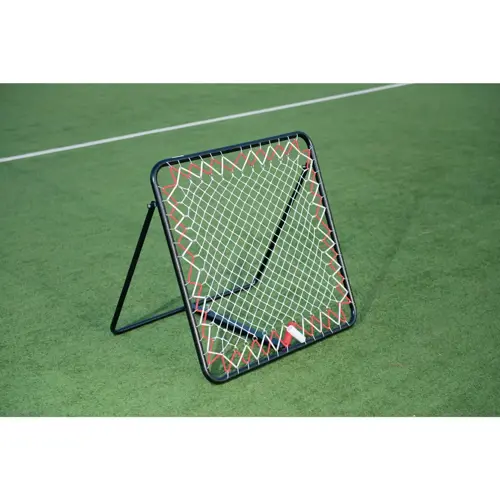
View our rebounder net here.
The rebounder might look at first sight to be one of the bluntest and most mundane pieces of hardware, however this couldn’t be further from the truth. It is a multi-functional piece of equipment which can be used by individuals practicing alone and also by small groups of players either as a stand-alone or in tandem over multiple disciplines.
Why Rebounders Are Used Across Multiple Sports
The first and most obvious thing is that you can kick or throw a ball at the rebounder and catch, control, or return the ball as it rebounds back to you. However, consider this! The rebounder is developing, exercising and strengthening your balance, your core muscles, and your individual muscles such as thigh (quadriceps), calf (gastrocnemius), arm (bicep, tricep), ankle (peroneus longus), shoulder (subscapularis, supraspinatus), stomach (rectus abdominis) to name a few.
Rebounders are widely used in football, netball, rugby, basketball, cricket, handball, and racket sports. Their versatility allows players to practise core skills such as passing, receiving, shooting accuracy, and first touch without the need for a training partner.
For coaches and teachers, rebounders offer a consistent and repeatable training stimulus, helping players develop technique through high repetition while maintaining engagement.
This wonderful piece of kit is also developing motor functionality and bi-directional alertness (occipital, parietal and temporal lobes and retina) via your left, right, forward, up, down or backwards reactions to be able to see and deal with and play the incoming ball or to clear the way after your served ball. In addition, when used over not-so-long-time phased periods (multiple 60-second and upward workouts) the rebounder can be the foundation for a serious cardiovascular (myocardium) workout as well as all the aforementioned motor functionality and strength development. In the school setting not only is this a physical activity lesson but also a catalyst to any biology classes your pupils may partake in thereafter as we are sure one can now see from the above-bracketed terminology. Such physical activity and academic knowledge can also help save lives through lifelong participation and pupil participation.
Physical Development Benefits
In addition to the muscular engagement already outlined, rebounder training supports:
Dynamic balance and stability
Joint strength and proprioception
Functional movement patterns used in sport
Injury prevention through controlled loading
Because movements can be adapted in intensity and complexity, rebounders are suitable for beginners, developing athletes, and rehabilitation settings alike.
Rebounders in Schools and Education
In schools, rebounders provide a safe, space-efficient solution for skill-based physical activity. They are particularly valuable where facilities are limited or where teachers need adaptable equipment that works across year groups and sports.
Beyond PE, rebounders offer strong cross-curricular links to science and biology by allowing pupils to experience physiological concepts, such as muscular contraction, heart rate response, and neural processing—in real time. This experiential learning supports deeper understanding and long-term retention.
Frequently Asked Questions About Rebounders
Are rebounders suitable for beginners?
Yes. Rebounders can be used at low intensity with simple tasks, making them ideal for beginners and young learners.
Can rebounders be used indoors?
Yes. Most rebounders are suitable for indoor sports halls as well as outdoor use.
Do rebounders replace partner training?
No, but they complement it by allowing high-repetition practice when partners are unavailable.
Are rebounders safe for school use?
Yes. When used correctly and with age-appropriate activities, rebounders are considered safe and effective in school environments.
Long-Term Value of Rebounder Training
Rebounders support lifelong physical development by combining strength, coordination, cognitive engagement, and cardiovascular fitness in a single piece of equipment. Their durability and multi-sport application make them a cost-effective investment for schools, clubs, and training facilities aiming to deliver high-quality physical education and athletic development.
Author
Gareth Pashley
Sports Content Writer & Marketing Specialist
Grassroots football coach and keen sports enthusiast, passionate about developing players, building confidence, and fostering a love for the game at every level.