
Smaller Ball, Smarter Development? What the New Women’s Rugby Ball Means for PE and Grassroots Coaches
Published on 13/05/2026 in News
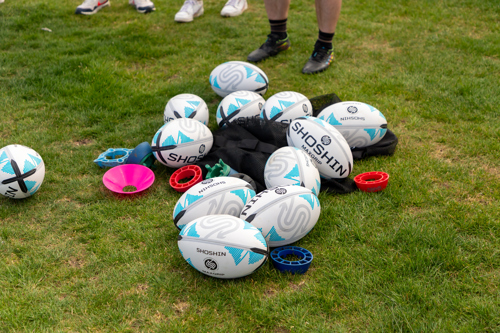
The recent decision by World Rugby to trial a smaller ball in the women’s game has created plenty of headlines—but beyond elite debates, it raises an important question for those working at the foundation of the sport:
What does this mean for PE lessons, school rugby, and grassroots coaching?
With a size 4.5 ball (around 3% smaller than the standard size five) now being tested at elite level, this could signal a shift in how we approach player development—particularly for girls moving through school and into club rugby.
Understanding the Change
Traditionally, once players reach senior level, both men and women use a size 5 ball. The new size 4.5 sits in between a youth size 4 and the adult size 5, while keeping the same weight.
World Rugby’s aim is simple:
Improve handling
Increase attacking play
Reduce unforced errors
This is based on the idea that a slightly smaller ball better suits average female hand size—and could lead to more confident, skilful play.
For grassroots coaches and teachers, this isn’t just theory—it links directly to how we structure sessions and support progression.
Why This Matters in Schools and Clubs
1. Bridging the Gap in Player Development
One of the biggest challenges in girls’ rugby is the jump from junior to senior equipment.
9-year-old less → Size 3
10–14-year-olds → Size 4
15+ years old → Size 5
That jump can feel significant—especially for players still developing strength, coordination, and confidence.
A size 4.5 ball could act as a stepping stone, helping players transition more smoothly into the adult game rather than facing a sudden jump in difficulty.
2. Improving Core Skills in PE Lessons & training
For PE teachers and coaches, one of the main priorities is maximising success and engagement.
Evidence from youth sport shows that modified formats and equipment increase:
Player involvement (more passes, touches, decisions)
Skill repetition and learning
Enjoyment and confidence
A slightly smaller ball could:
Make catching and passing easier
Encourage more offloads and continuity
Reduce frustration from repeated handling errors
In a training setting, that means:
✅ More active lessons
✅ Higher engagement from less confident pupils
✅ Faster skill progression across mixed-ability groups
3. Building Confidence and Retention
We’ve all seen it: players—especially beginners—lose confidence when basic skills feel too difficult.
Early trial feedback suggests the smaller ball allows players to:
Catch more cleanly
Pass more quickly
Play more instinctively
For grassroots rugby, this has a huge knock-on effect:
Increased enjoyment
Greater willingness to stay in the sport
More players progressing into club rugby
And at a time when growing the women’s game is a priority, these marginal gains matter.
Final Thoughts: Development First, Debate Second
The smaller ball debate might feel like an elite-level issue—but for PE teachers and grassroots coaches, it highlights something much bigger - The importance of designing the game around the player—not forcing players to fit the game. Whether or not the size 4.5 ball becomes standard, the core lesson remains to build confidence early and keep players engage whilst enjoying the game. If the new rule does come into force, we will support Schools and Clubs with the relevant equipment for their sessions.
Author

Gareth Pashley
Sports Content Writer & Marketing Specialist
Grassroots football coach and keen sports enthusiast, passionate about developing players, building confidence, and fostering a love for the game at every level.