Four ways to support better mental wellbeing
Published on 26/01/2026 in Primary Schools

Place2Be’s Children’s Mental Health Week is now in its eleventh year and continues to highlight the necessity of promoting and protecting good mental health practices in school children. As an official partner of this initiative, Findel, and its brands, fully supports the healthy development of children, as well as providing the resources teachers need to help educate children to cope with resilience and honesty.
It doesn’t need to be complicated. Children can be inspired to use their imagination through short practices, so they understand how to build the skills they need to develop a positive mindset.
Four simple activities to support better mental wellbeing in children
1. Take a sensory exploration into nature and discover the calming effect of the outdoors:
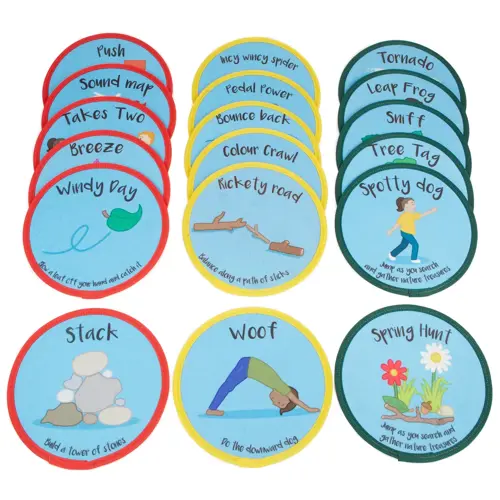
These brightly coloured Sensory Circuit Circles have been designed for children to express their feelings as they explore nature. Lay them in the playground or around the school’s greenspace and ask the children to follow the circuit and complete the tasks. The aim is two-fold: the children are away from the classroom and in the fresh air, learning about nature, with the opportunity to follow a trail like they’re hunting for treasure. Asking questions whilst immersed in a different setting creates thought-provoking reactions and attitudes. Examples of the Sensory Circuit are:
a. Spring Hunt: Search and gather nature’s treasures, such as leaves, flowers, acorns. How does being outside affect their mood and feelings? Are they calmer? What does it mean to be with other children in nature doing the same things?
b. Stack it: Build a tower of sticks (ask the children to find different shapes and sizes.) Remind them that it doesn’t matter how big or small they are, each one is significant in creating a stable stack. Ask them what this means in the context of their own value and worth. How are they fundamental in their own environment.
2. Use emotion balls to help children express their feelings:
It is often difficult for children to express complex emotions, especially in the classroom. Take the children away from their desks and into a quiet area. Ask them to select one of these emotion balls to represent how they’re current feeling. Why did they choose this and if it is a negative feeling, ask them to articulate what they think they need to make it more positive. Creating space for children to develop their emotional awareness with props develops their intelligence and understanding of their feelings.

3. Controlled breathing and learning to be calmer:
When emotions are running high it is important for children to understand how to manage their reactions and find a way of being calmer. This rainbow coloured Expandaball can be used to imitate breathing. Ask the child to hold the ball closed. It is tightly packed to represent the big feelings they currently have. As they pull the ball out and make it bigger, ask them to take a long, deep breath. When they retract the ball tightly again, ask them to breathe out and drop their shoulders.

4. Develop balance and control with junior yoga:
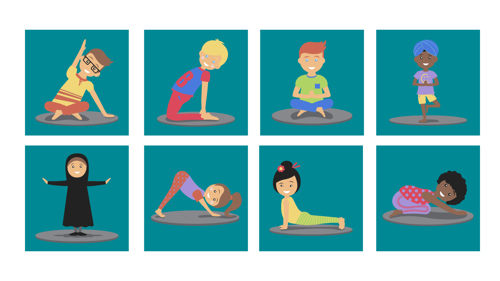
Mindfulness and movement can cohabitate at school. Position these Yoga Placement Mats in a quiet area of the classroom. Roll a dice and ask the children to take that number of steps forward or to the side until they reach one of the mats. Ask them to copy the pose on the mat and hold it for 5 seconds whilst they take a deep breath in and release. Practicing these techniques will help them to understand that stretching and breathing exercises can help initiate calmer feelings and relaxation.