
Supporting Children’s Mental Health Week
Published on 19/01/2026 in Primary Schools
Davies Sports, part of the Findel family of brands, is supporting primary school teachers in delivering wellbeing activities this February.
Findel is an official partner of Place2Be, the charity behind Children’s Mental Health Week in the UK that offers free resources to primary schools to promote active wellbeing. This dedicated wellness week tackles themes around belonging, identity, mental resilience and activity – all increasingly important as many younger children are struggling: 1 in 5 are reported as having a mental health problem and 50% of mental health conditions established before the age of 14.
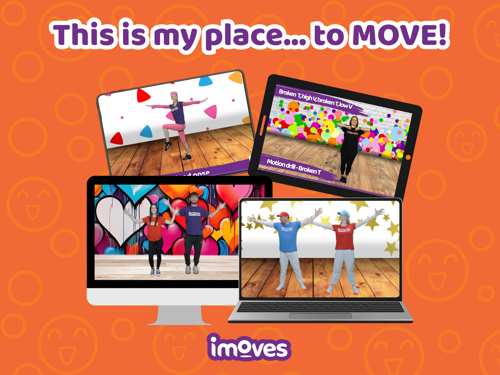
The promotion of good wellbeing is welcomed by organisations within the primary PE community. Davies Sports has teamed up with imoves, an all-in-one PE and active learning platform that empowers teachers to deliver PE confidently via engaging video content and comprehensive lesson plans, to deliver another programme of FREE resources during Children’s Mental Health Week. These plans are based about anxiety and mood, relationship building and active movement in school.
We reached out to Imogen, the founder of imoves, for her take on the important of movement and wellbeing in primary school aged children.
Why movement is so good for children’s wellbeing
“Ask any teacher what their pupils are like by Friday afternoon and you’ll probably hear the same words: tired, wriggly, emotional, fragile. Children are dealing with a lot during a typical school week, academically, socially and emotionally, so it’s no surprise that wellbeing has become one of the biggest priorities for schools.
What we don’t always talk about is just how powerful movement is in that picture.
We’ve known for years that physical activity is good for our bodies. But the mountain of evidence is now very clear: moving more is one of the simplest, most effective ways to support children’s mental health and wellbeing.
What happens in the brain when children move?
When primary school children move, whether that’s a quick active burst in the classroom, a dance in the hall or a game outside, several things happen at once:
Their heart rate increases and more oxygen-rich blood reaches the brain, which is linked to better attention and thinking, reducing brain fog.
Their body releases endorphins and other feel-good chemicals that help lift mood and reduce stress.
Movement activates brain areas involved in emotion regulation and executive function, the skills we need to plan, focus and manage mood and impulses.
From a classroom point of view, that often looks like:
Fewer meltdowns, calmer transitions and children who are simply more ready to learn.
Movement as a stress release for primary-aged children
Modern school days are cognitively demanding. Children are expected to switch quickly between tasks, sit still, concentrate and manage tricky social situations. For some, that comes fairly easily. For others, especially children with additional needs, trauma or anxiety, it can be overwhelming.
Short, planned bouts of physical activity work like a pressure valve and stress release:
They give the nervous system a chance to reset.
They offer a safe way to release energy fizz, frustration or worry through the body rather than through behaviour.
They provide a change of state, from sitting and thinking, to moving and feeling.
A three-minute brain break won’t magically remove the challenges a child is facing but it can:
Reduce muscle tension and stress
Improve mood
Create a brief, shared positive experience with the rest of the class
Those small changes add up, especially when movement is woven into the day, not just saved for PE and sports acitvities.
Why movement supports emotional literacy
Wellbeing isn’t only about “feeling better”. It’s also about understanding what we feel and what helps. Movement lends itself brilliantly to this. With the right questions, teachers can help children link sensations, emotions and strategies:
“Notice your heart and your breathing before we start.”
“After that active blast, what’s changed in your body?”
“Which movement helped you feel calmer, stretching, shaking, jumping?”
Over time, children learn:
“When I feel tight in my chest, stretching helps.”
“When I feel sleepy, a quick dance wakes me up.”
“When I feel cross, moving my body is safer than shouting.”
That is emotional literacy in action – and it starts with very simple prompts layered onto everyday movement.
Children feeling a sense of belonging
Wellbeing is also about belonging: feeling that you have a place in your classroom and your school.
Movement, especially in pairs and groups, can:
Break down social barriers (“we all look a bit silly doing this together”)
Provide safe ways to connect without needing to find the right words
Show children that difference (in ability, personality, culture) can be celebrated, not hidden
That’s particularly important for Children’s Mental Health Week 2026, with Place2Be’s theme “Where is my place?”. Using movement and play to explore My Body, My Classroom, My School gives children a very tangible way to answer that question.
What does this look like in real classrooms?
In practice, schools don’t need a whole new timetable. Often, it’s about using what you already have in a slightly different way.
For example:
A 2–3 minute active blast between lessons to reset focus
A short yoga or stretch sequence after lunch to bring the class back together calmly
A simple partner balance or mirroring task in the hall to build trust and teamwork
A brief walk-and-talk outside so children can chat while moving
Teachers tell us these small additions:
Reduce low-level disruption
Improve transitions
Give children who struggle academically a chance to shine
The key is consistency. Movement works best when it’s part of the rhythm of the day, not a once-a-half-term special.
Keeping your PE kit simple
You don’t need a fully stocked PE cupboard for movement to support wellbeing. In fact, some of the most effective tools are:
Floor spots or cones, giving children a clear place to stand, which can feel reassuring
Soft balls or beanbags, ideal for gentle passing games that build connection
Ribbons or scarves, perfect for expressive movement and calming, flowing actions
Movement as a wellbeing habit
Ultimately, the question isn’t “Can movement improve children’s wellbeing?” the research and real-life stories say yes, repeatedly. The question is: “How can we make small, regular moments of movement a normal part of our school day?”
That’s where programmes like imoves, and partnerships with organisations such as Davies Sports and Place2Be, can help – by giving teachers:
Ready-made ideas that are easy to pick up
Activities that work in real classrooms with real constraints
A framework that connects movement to belonging and emotional literacy, not just fitness
If we can help children feel “this is my place” in their bodies, classrooms and schools, even for a few minutes at a time, we’re not just contributing to their physical health. We’re laying foundations for lifelong wellbeing.”
To discover more about the programme of activities imoves has developed for Children’s Mental Health week visit their page https://imoves.com/childrens-mental-health-week
Author: Imogen Buxton-Pickles, primary PE specialist and founder of imoves